
Sending DMs to Yourself as a Special Journaling Practice

Therapists have long recommended writing down your thoughts. But journaling can feel like a commitment. Texting yourself? That’s something you can do in ten seconds—and it might help more than you expect.
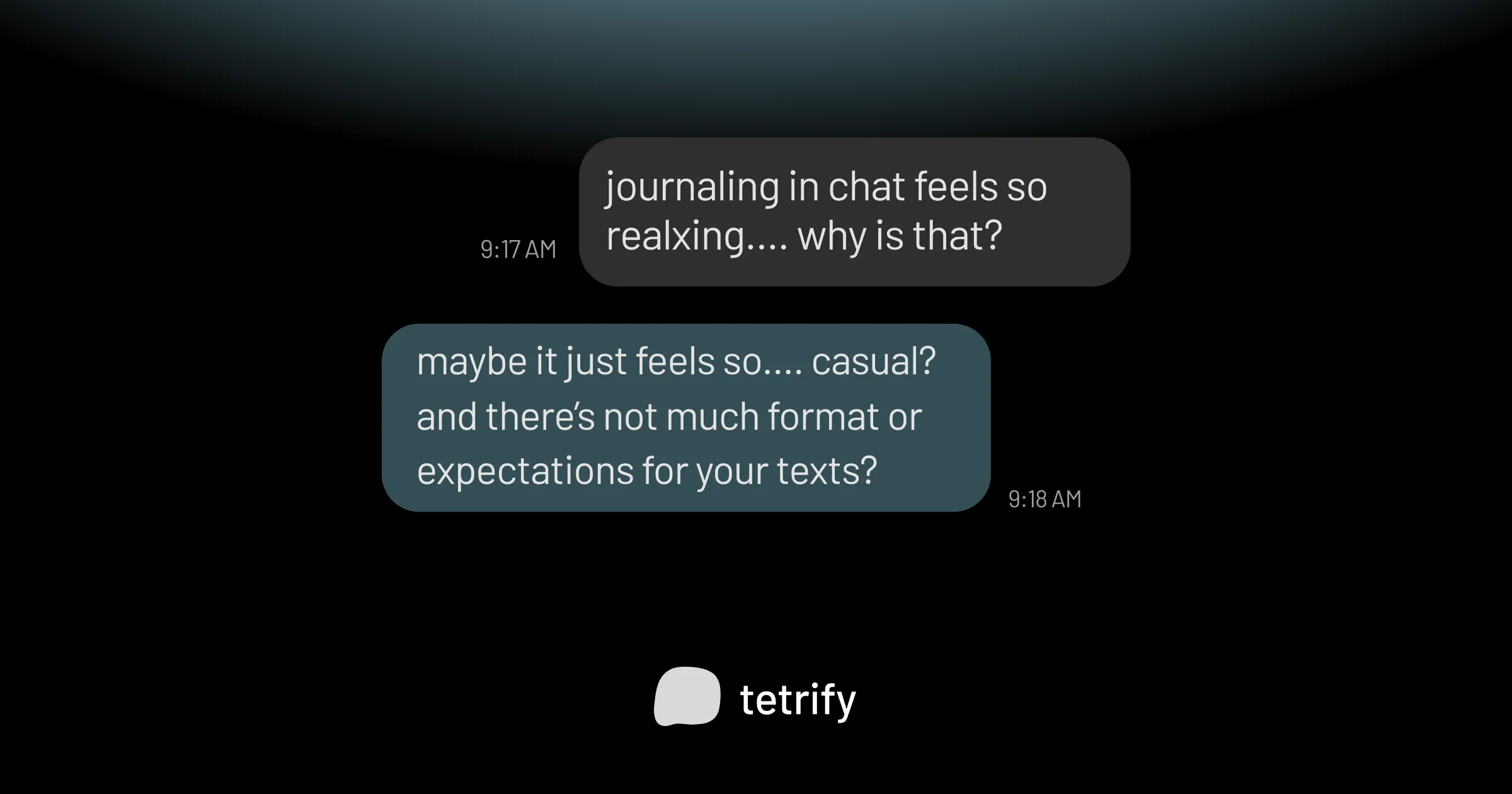
The Therapeutic Power of Getting It Out
Section titled “The Therapeutic Power of Getting It Out”There’s a reason therapists ask you to talk about your feelings. There’s a reason journaling shows up in mental health recommendations everywhere. Getting thoughts out of your head and into the world — even just onto a screen — does something to them.
Psychologists call this “externalization.” When a thought is swirling inside your mind, it feels overwhelming and infinite. When it’s written down, it becomes finite. Contained. Something you can look at from a distance rather than being lost inside.
This is why people feel relief after venting to a friend. The thought is no longer trapped inside them.
Why Journaling Feels Like Too Much
Section titled “Why Journaling Feels Like Too Much”The problem with traditional journaling is the ceremony of it. You’re supposed to sit down, open a notebook or app, and write. Properly. About your feelings. In a way that makes sense.
For many people, that’s a non-starter. When you’re anxious or overwhelmed, the last thing you want is another thing you’re supposed to do. The journal becomes one more obligation, one more way to feel like you’re not doing enough.
So people don’t journal. Or they start and stop. Or they feel guilty about the blank pages.
The Ten-Second Check-In
Section titled “The Ten-Second Check-In”Here’s a different approach: just start a virtual chat with yourself for your thoughts.
Not a proper journal entry. Not a structured reflection. Just whatever’s in your head, sent as a message. “Feeling anxious about tomorrow.” “Can’t stop thinking about that conversation.” “Weirdly sad today and don’t know why.”
It takes ten seconds. There’s no pressure to elaborate or analyze. You’re not trying to produce good writing. You’re just… saying it. To yourself.
And that tiny act of externalization? It helps. The thought is out of your head now. It’s sitting in a chat window, less scary than when it was bouncing around your skull.
Creating Distance from Your Thoughts
Section titled “Creating Distance from Your Thoughts”There’s something about the chat interface specifically that creates healthy distance. When you text someone else, you’re explaining your experience to another person. When you text yourself, something similar happens — you’re framing the thought as if reporting it to someone.
This shifts you from being inside the feeling to describing the feeling. Cognitive behavioral therapy calls this “cognitive defusion” — the ability to see your thoughts as thoughts rather than facts.
“I’m a failure” is a heavy thing to feel. “I’m having the thought that I’m a failure” is something you can observe and question. Texting yourself naturally creates that separation.
Building a Mood Record
Section titled “Building a Mood Record”Over time, your self-chat becomes a record of how you’ve been feeling. This is genuinely useful, especially if you’re working with a therapist or trying to notice patterns.
“When did I start feeling this way?” becomes answerable. You can scroll back and see. “Am I always anxious on Sundays?” You can check. “Is this new or have I felt this before?” The history is right there.
You’re not trying to build this archive consciously — it just emerges from the habit of texting yourself when something’s on your mind.
The Difference from Venting Online
Section titled “The Difference from Venting Online”Texting yourself is private. This matters.
Posting about your feelings on social media comes with baggage: how will people react? Am I oversharing? Will this seem dramatic? That self-consciousness changes what you’re willing to say.
A chat with yourself has no audience. You can be as honest and messy as you need to be. You can say the embarrassing thing. You can admit the irrational fear. Nobody’s judging, because nobody’s watching.
A Practice, Not a Cure
Section titled “A Practice, Not a Cure”To be clear: texting yourself isn’t therapy. It’s not a substitute for help if you need it. But it’s a low-barrier way to start paying attention to your own mind — a tiny practice that costs nothing and might genuinely help.
For some people, it’s a stepping stone to more structured journaling. For others, it’s enough on its own. Either way, it’s better than letting thoughts spin endlessly without ever putting them anywhere.

tetrify can support your mindfulness journey
Dedicated journaling spaces with optional mood tracking — the same simple chat interface you find in messaging apps but optimized for you. No account or internet needed.